
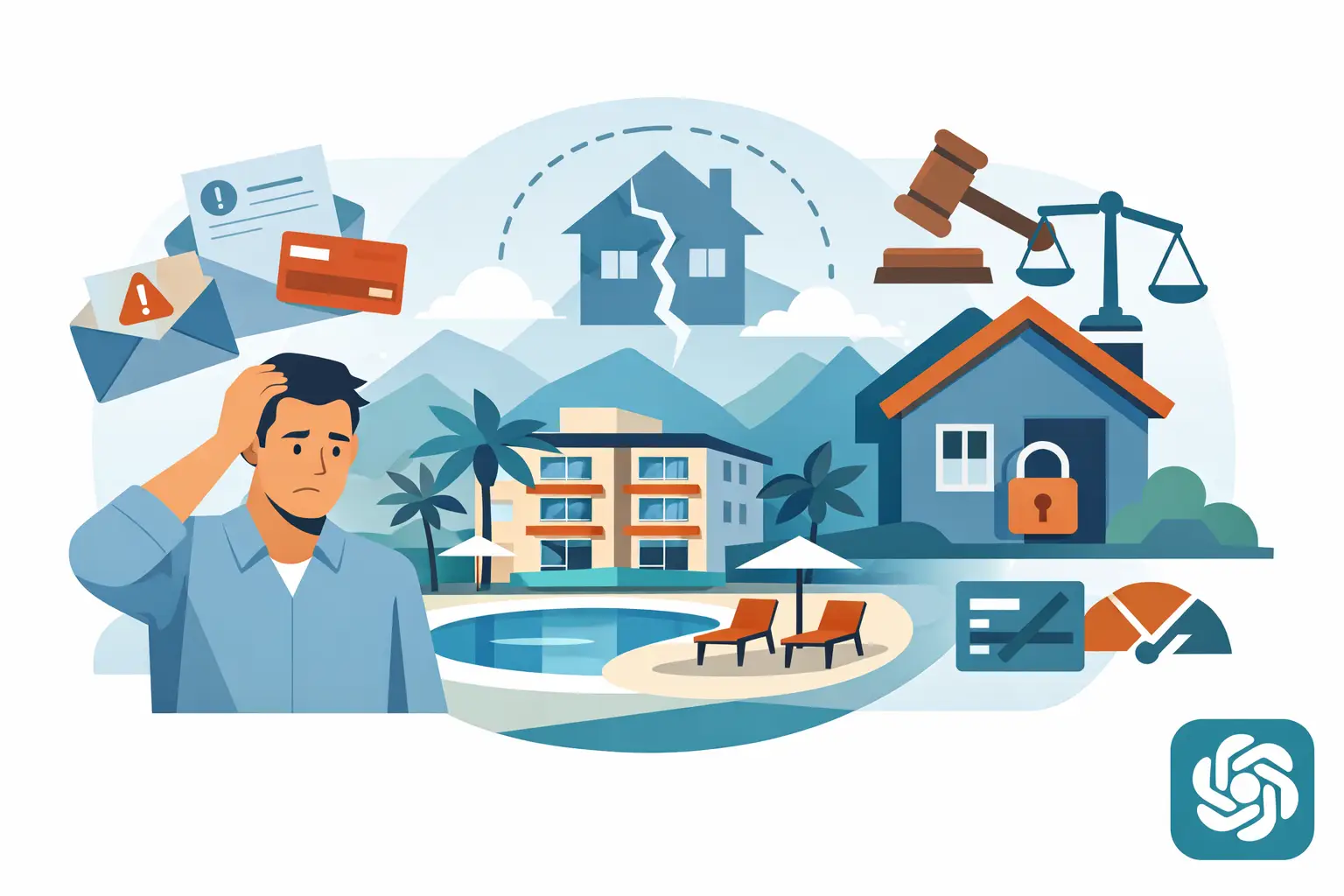
The question usually comes up after one more maintenance fee bill, one more loan payment, or one more year of not being able to use what you bought. If you are asking what happens if I stop paying timeshare, you are not alone – and you are not foolish for asking. Many owners reach this point after health changes, retirement income pressure, divorce, a spouse passing away, or years of frustration with rising costs.
The short answer is this: stopping payment can trigger a chain reaction. What happens next depends on whether you still owe on the timeshare loan, whether you are only behind on maintenance fees, what state or country the resort is in, and how aggressive that resort is about collections. Some owners face repeated collection calls and credit damage. Others may face foreclosure, legal action, or tax issues. That does not mean every case ends the same way, and it does not mean you have no options before things spiral.
What happens if I stop paying timeshare bills?
When owners say they want to stop paying, they are usually talking about one of two different bills. The first is the loan payment, if the purchase was financed. The second is the annual maintenance fee, special assessment, or club dues. Those two debts are related, but they are not handled the same way.
If you stop paying the loan, the lender or resort will usually begin delinquency notices first. That may be followed by collection activity, late fees, default notices, and eventually foreclosure or another recovery process depending on the contract. If you stop paying maintenance fees, the resort may still send the account to collections and may still pursue foreclosure, even if the original purchase loan has already been paid off.
This is where many owners get caught off guard. They assume that once the loan is paid, they can simply walk away. In most timeshare contracts, that is not how it works. The ongoing fees are tied to ownership, and the resort may continue treating the account as legally enforceable until ownership is properly transferred, canceled, surrendered, or foreclosed.
The first stage is usually collections, not immediate foreclosure
Most resorts do not jump straight to taking the property back. They usually start with phone calls, letters, emails, and past-due notices. If the account stays unpaid, it may be referred to an internal collections department or a third-party collector.
That stage can be stressful, especially for older owners or surviving spouses who are already overwhelmed. The calls can feel intimidating, and some owners are told things in broad, scary language without much explanation. The more you understand, the less fear controls your decisions.
Collections can also increase the balance. Late fees, interest, collection charges, and attorney fees may be added depending on the contract and local law. A relatively small unpaid amount can grow over time.
Can stopping payment hurt your credit?
Yes, it can. If the resort, lender, or collection agency reports the delinquency to the credit bureaus, your credit score may drop. How much it drops depends on your overall credit profile, the age of your accounts, and how severe the delinquency becomes.
For some owners, this matters a great deal. If you plan to refinance a mortgage, buy a car, use a credit card for emergency expenses, or qualify for certain rental housing, credit damage can create new problems on top of the timeshare problem. For others, especially retirees who do not plan to borrow again, credit may not be the main concern. Even then, it should not be ignored. A damaged credit report can still affect insurance pricing, housing choices, and peace of mind.
Not every account is reported the same way, and not every resort handles delinquencies identically. But if you stop paying, you should assume credit risk is on the table.
What happens if I stop paying timeshare and the resort forecloses?
Foreclosure is one of the most common end points when an owner stops paying and no resolution is reached. In a timeshare foreclosure, the resort or lender uses the legal process allowed under the contract and governing law to take back the ownership interest.
That may sound like a clean ending, but it is not always quick or harmless. A foreclosure can appear on your credit report. The process may take months or longer. In some situations, owners continue receiving bills and collection notices during that period. And depending on the structure of the debt, foreclosure does not always guarantee the balance disappears immediately.
There is also an emotional cost. Many owners tell themselves they will just stop paying and let the resort take it. Then months pass, the phone keeps ringing, the mail keeps coming, and the uncertainty becomes its own burden.
Loan balance versus maintenance fees – why the difference matters
If you financed the purchase and still owe a loan balance, the resort or lender may be more aggressive because there is a larger debt at stake. If the loan goes into default, there may be a more formal recovery effort and a more direct credit impact.
If the loan is already paid off and only maintenance fees remain, some owners think the risk is minor. That can be a mistake. Resorts often pursue unpaid maintenance fees because those fees support the property and other owners. In many cases, unpaid fees can still lead to collections, foreclosure, and significant added costs.
This is why blanket advice from online forums can be dangerous. One owner may say, “I stopped paying and nothing happened.” Another may say, “I was sued.” Both may be telling the truth based on different contracts, different resorts, and different legal jurisdictions.
Could the resort sue you?
Sometimes, yes. Whether they will depends on the amount owed, the resort’s collection practices, and the laws that apply to your ownership. Some resorts rely mostly on foreclosure. Others may pursue a money judgment, especially if the account balance is substantial.
This is one of those areas where fear often runs ahead of facts. Not every delinquent account becomes a lawsuit. But it is also unwise to assume that legal action never happens. If you receive a formal legal notice, it should be taken seriously and reviewed promptly.
Are there tax consequences?
There can be. If a lender or resort forgives part of a debt, you may receive tax paperwork reflecting canceled debt income. Whether that creates an actual tax bill depends on your broader financial situation and tax rules at that time. This is not the first issue most owners worry about, but it should be part of the conversation when evaluating settlement or foreclosure outcomes.
A better question: should you stop paying before reviewing your options?
Usually, no. Stopping payment without a plan is risky. Sometimes owners do it out of desperation, and that is understandable. But a planned approach is almost always better than a panic response.
Before you decide to stop paying, it helps to determine whether there may be a legitimate cancellation path, a surrender option, a hardship request, a negotiated settlement, or another documented exit strategy. Some owners have facts on their side that they do not realize matter, such as age-related hardship, health limitations, sales misrepresentations, or contract issues.
That does not mean every owner can simply cancel on demand. It does mean your situation may be more workable than it looks when you are alone with a late notice and a knot in your stomach.
What to do before you miss another payment
Start by gathering your purchase agreement, financing documents, maintenance fee statements, deed or membership papers, and any sales materials or emails that may show what you were told. If your circumstances changed after purchase, collect proof of hardship such as medical limitations, fixed-income strain, death of a co-owner, or inability to travel.
Then get clear on exactly what you owe. Is it a loan, maintenance fees, or both? Is the ownership deeded or right-to-use? Is the resort in the U.S., Mexico, or the Caribbean? Those details affect the range of realistic options.
Most important, do not hand thousands of dollars to the first exit company that promises a guaranteed result after a short sales pitch. Fear makes people vulnerable. A thoughtful review of your contract and circumstances should come before any expensive commitment. That is one reason services like Timeshare Debt Relief focus first on education and case review instead of pressure.
If you already stopped paying, all is not lost
Many owners do not start looking for help until they are already behind. If that is you, it does not automatically mean your case is ruined. In some situations, there may still be room to pursue cancellation, surrender, settlement, or a documented hardship resolution.
The key is to act before the problem gets further away from you. Ignoring notices rarely improves the outcome. Reading the letters, understanding the stage of the account, and getting informed guidance can reduce the damage and help you make a calmer decision.
A timeshare bill can make you feel trapped, but being behind does not mean you are powerless. The best next step is not blind hope and not panic. It is clarity. Once you understand what the resort can do, what it may not do, and what options may still be available in your specific case, you can move forward with a lot less fear.