
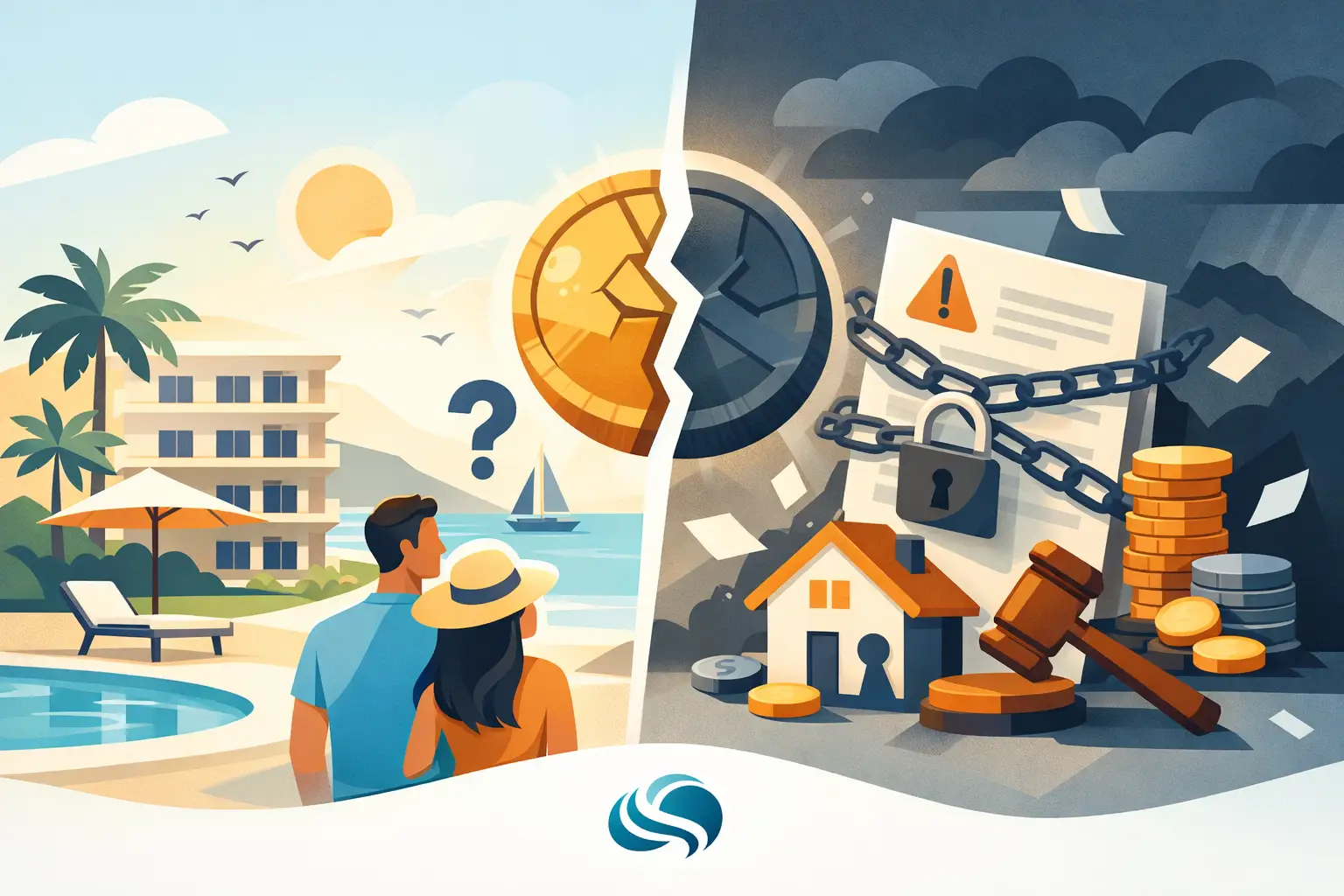
WANT TO STOP PAYING ON YOUR TIMESHARE? Here’s What You Can Expect… If you’re asking what happens if you stop paying timeshare maintenance fees, you’re probably already past the point of mild frustration. Usually, this question comes up after another fee increase, a special assessment, a life change, or the realization that the timeshare no longer fits your budget or your travel habits. The short answer is simple: the problem usually does not go away on its own, and the resort or management company may keep escalating collection efforts until the account is resolved.
That said, not every timeshare defaults the same way. The outcome depends on what you own, where the resort is located, whether there is still a loan balance, and how aggressive the developer or homeowners’ association is about collections. Some owners are threatened with immediate legal action and constant calls. Others hear very little at first, then get hit with collections or foreclosure months later. The important thing is to understand the likely chain of events before you decide to stop paying.
What happens if you stop paying timeshare maintenance fees?
In most cases, the first stage is delinquency. Once you miss a payment, the resort, HOA, or management company starts adding late fees, interest, and collection charges based on the governing documents for that ownership. If your maintenance fees are billed annually, it may feel like one missed payment is manageable. But once penalties begin stacking up, the balance can grow faster than many owners expect.
After that, collection activity usually begins. You may get letters, emails, and phone calls from the resort’s internal collections department or from a third-party collection agency. Some companies are relatively slow and procedural. Others move quickly, especially if the resort has a history of aggressive enforcement.
If the debt remains unpaid, many resorts eventually start foreclosure or a surrender-related review, depending on their policies. Some systems would rather take the ownership back than keep chasing an owner who clearly cannot or will not pay. Others push harder because they want to recover as much money as possible before taking the interval back.
The biggest risk is not just the missed fee
Owners often focus on the maintenance fee bill itself. The larger risk is what can follow. A timeshare default can affect your credit, create collection pressure, and leave you exposed to additional charges while the account remains open.
If you still owe on the purchase loan, the situation is even more serious. In that case, you’re not just behind on maintenance fees. You’re potentially defaulting on a financed obligation as well. That can lead to a separate collection path, a larger deficiency claim, and more significant credit consequences.
Even if the ownership is paid off, the resort may still pursue unpaid maintenance fees as a contractual debt. Many owners assume a paid-off timeshare is easier to walk away from. Sometimes it is, but that does not mean there are no consequences.
Will your credit be damaged?
Possibly, yes. But it depends on how the resort reports delinquent accounts and whether the debt is sent to collections. Not every timeshare-related delinquency appears on every credit report in the same way. Some owners see a clear negative entry from the collection agency or foreclosure process. Others see less immediate impact, which can create false confidence.
The problem is that credit reporting is only one part of the issue. Even if the damage is delayed or less visible than expected, the debt may still be active. That matters if you’re applying for a mortgage, refinancing, trying to borrow, or simply wanting the matter behind you. A timeshare account that sits unresolved can keep resurfacing.
This is one reason owners should be careful about online advice that says, “Just stop paying and nothing will happen.” That advice is too simplistic. Sometimes a resort is disorganized. Sometimes enforcement is slow. But slow is not the same as harmless.
Can the resort foreclose on a timeshare?
Yes, many can and do. Whether the process is judicial or nonjudicial depends on the state, the resort structure, and the underlying documents. In practical terms, foreclosure means the resort or association takes back the ownership after you default.
For some owners, that may sound like the result they wanted anyway. But foreclosure is rarely clean or painless. It can take time, involve collection pressure, and potentially affect your credit. In some cases, owners are also pursued for balances that built up before the foreclosure was completed.
This is especially important for deeded timeshares. If you own a deeded week or points interest tied to real property, the foreclosure process may resemble a stripped-down version of real estate foreclosure. If you own a right-to-use membership, the enforcement route may be more contractual than property-based. The legal structure matters, but either way, nonpayment can still trigger serious consequences.
What if the timeshare is in Mexico or the Caribbean?
This is where owners get confused fast. A lot of US-based owners assume a foreign resort cannot do much if they stop paying. Sometimes cross-border collection is less straightforward, but that does not mean there is no risk.
If you financed the purchase through a company that operates in the US, uses US-based collection agencies, or has contracts tied to US residents, collection pressure can still reach you here. The same is true for some vacation club memberships sold in Mexico that rely on US marketing and payment systems. The details of the contract matter more than the country listed on the sales presentation.
Thinking about canceling your timeshare? Before paying thousands to an exit company, request your FREE Timeshare Exit Review. I’ll personally review your ownership and explain your options—honestly, with no obligation. Learn more at www.gettimesharedebtrelief.com.
This is one of those areas where broad internet advice can be dangerous. The answer depends on the exact resort, contract language, and collection history.
Why resorts fight so hard over maintenance fees
Maintenance fees are the lifeblood of the system. They fund operations, staffing, repairs, taxes, reserves, and management. When owners stop paying, the burden often shifts to the remaining owners. That is one reason HOAs and developers can be aggressive. They are not just protecting one invoice. They are protecting the revenue stream that keeps the property functioning.
From the resort’s point of view, letting owners walk away without resistance encourages more defaults. From the owner’s point of view, being trapped in a perpetual obligation over an unwanted asset feels unreasonable. Both things can be true at the same time, which is why these disputes get so ugly.
Is stopping payment ever part of an exit strategy?
Sometimes owners stop paying because they truly cannot afford the fees. Sometimes they do it intentionally because they believe default is the only realistic path out. That can happen, but it should be viewed as a last-resort decision, not a casual strategy.
Before you stop paying, you should know whether the resort has a deed-back program, a surrender option, a hardship review, or an internal exit path. Some companies will not talk seriously about surrender until the owner is already behind. Others are more willing to review a voluntary exit while the account is still current. Timing matters.
You also need to know whether the timeshare has any resale value at all. In most cases, resale value is little to none, but there are exceptions. If there is a legitimate transfer route, that may be better than default. And if someone is promising an easy resale for an upfront fee, that should raise a red flag immediately.
At Everything About Timeshares, this is where owners often need an independent review before making a costly mistake. Stopping payment without understanding the likely outcome can box you into a harder situation.
What to do before you stop paying timeshare maintenance fees
If you are close to that point, pause long enough to gather documents and get clear on the ownership. Find the contract, deed or membership agreement, current fee statement, loan information, and any correspondence from the resort. You need to know whether this is deeded or right-to-use, paid off or financed, domestic or international, and whether there are any existing default notices.
Then contact the resort directly and ask specific questions. Do they have a surrender program? Do they accept deed-backs? Is there a hardship department? Will they review medical or financial hardship? Get answers in writing whenever possible.
If the resort offers no realistic option, that does not automatically mean you should hire the first exit company that calls you. Many owners get hurt twice – once by the original purchase and again by paying large upfront fees to companies that overpromise and underdeliver. If you seek help, make sure it is based on reviewing your actual documents and resort-specific facts, not generic sales talk.
The real answer most owners need
What happens if you stop paying timeshare maintenance fees is not just a legal question. It is a practical risk question. You may face collections, credit damage, foreclosure, ongoing stress, and a longer, messier exit than expected. Or you may find that the resort is willing to take the ownership back if you approach it the right way before things get worse.
The worst move is to act out of panic or rely on wishful thinking. If you cannot keep paying, get clear on the contract, the resort’s actual policies, and the likely consequences before you make your next move. A bad timeshare decision is painful enough. You do not need a second bad decision on top of it.